Nitrocarburizing as the alternative to chrome plating
Basics for finding an alternative to hard chrome
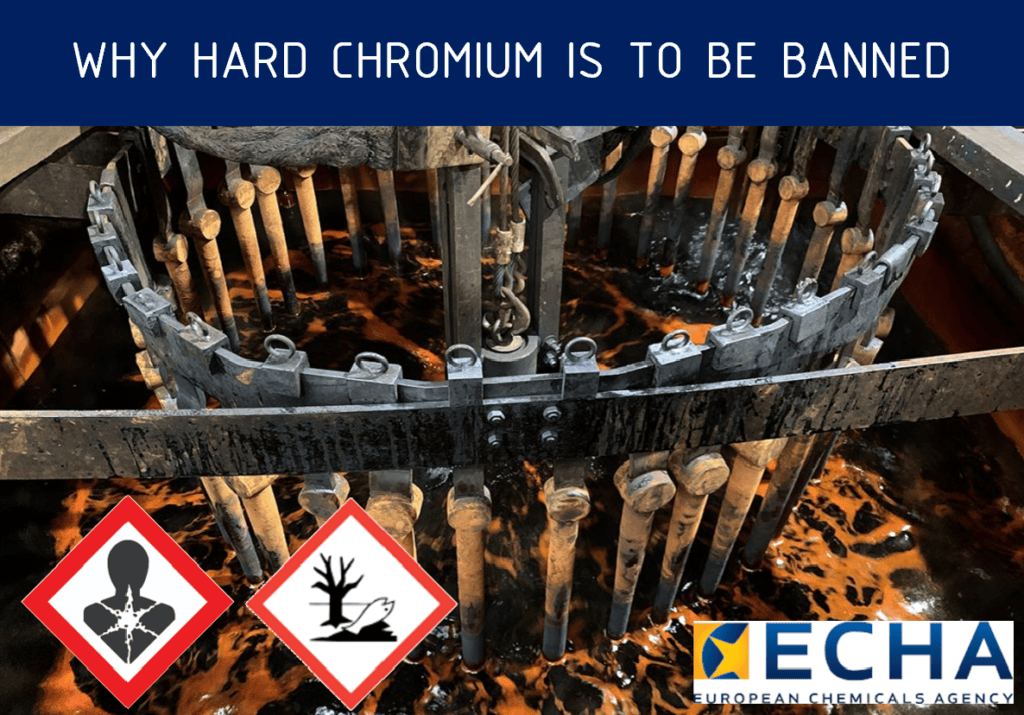
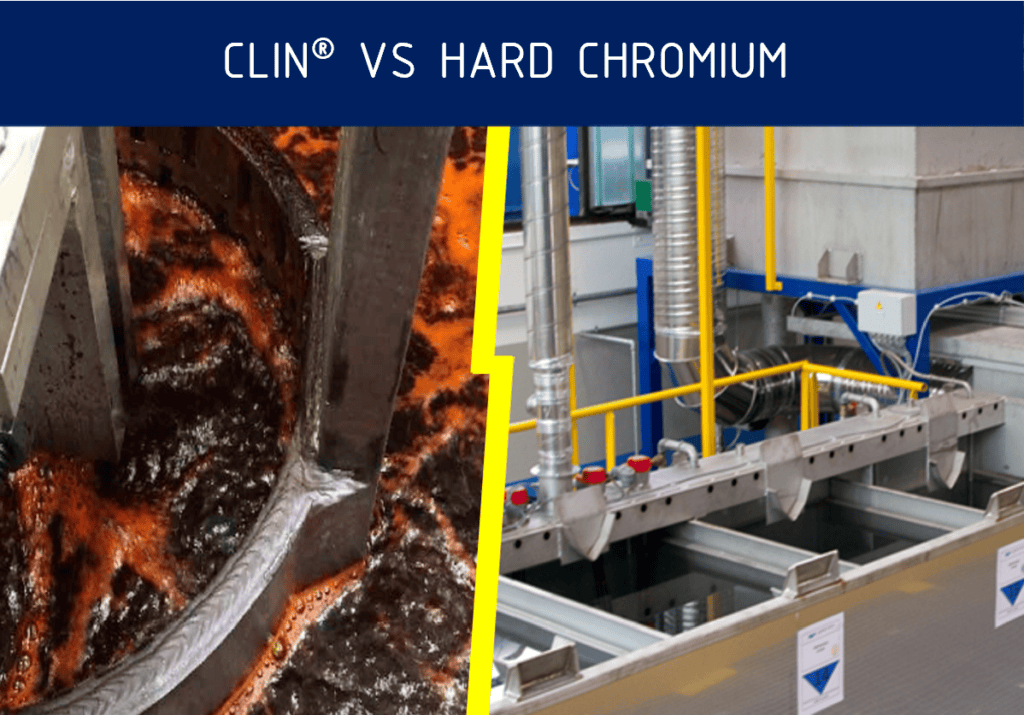
Legal status of the issue:
- Directive 2002/95/EC of the European Parliament and of the Council of the European Union – hexavalent chromium (used in electroplating baths for chrome plating) has been recognized as a hazardous substance. It has a harmful effect on human health and therefore its use should be limited. Ultimately, it should be replaced by more both environmentally and human health friendly substances,
- EC Decision (No. 2006/692/EC) – hexavalent chromium could still be used, however its producers had to apply for a permit to use baths containing Cr6+ ions.
- Judgment of the European Court of Justice of April 20, 2023 – annulling the decision authorizing the use of chromium trioxide and limiting its validity to April 20, 2024. Moreover, in response to the judgment, the European Commission authorized the European Chemicals Agency (ECHA) to transfer chromium trioxide and chromic acid from the REACH Authorization List to the Restrictions Dossier,
- In a 2020 report, the German Federal Institute for Occupational Safety and Health, in cooperation with the European Union, prepared a report: Alternatives for chromium trioxide in hard/functional and decorative chrome plating. The report indicates that nitriding in salt baths as an available alternative to hard chromium plating.
- No Cr 6+ ions (toxic hexavalent chromium) – no concerns under REACH,
- No post-processing grinding required,
- No need to heat treatment parts after processing to eliminate the risk of hydrogen embrittlement,
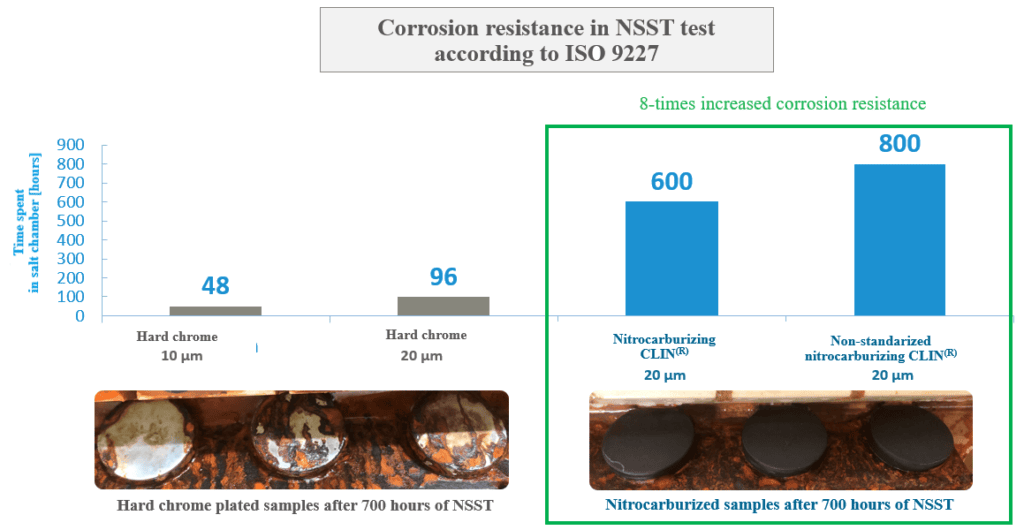
- Higher corrosion resistance in the salt spray test (SST) for the same coating thickness,
- Similar corrosion resistance tested using the CASS method,
- No risk of loss of mechanical properties due to the heat treatment,
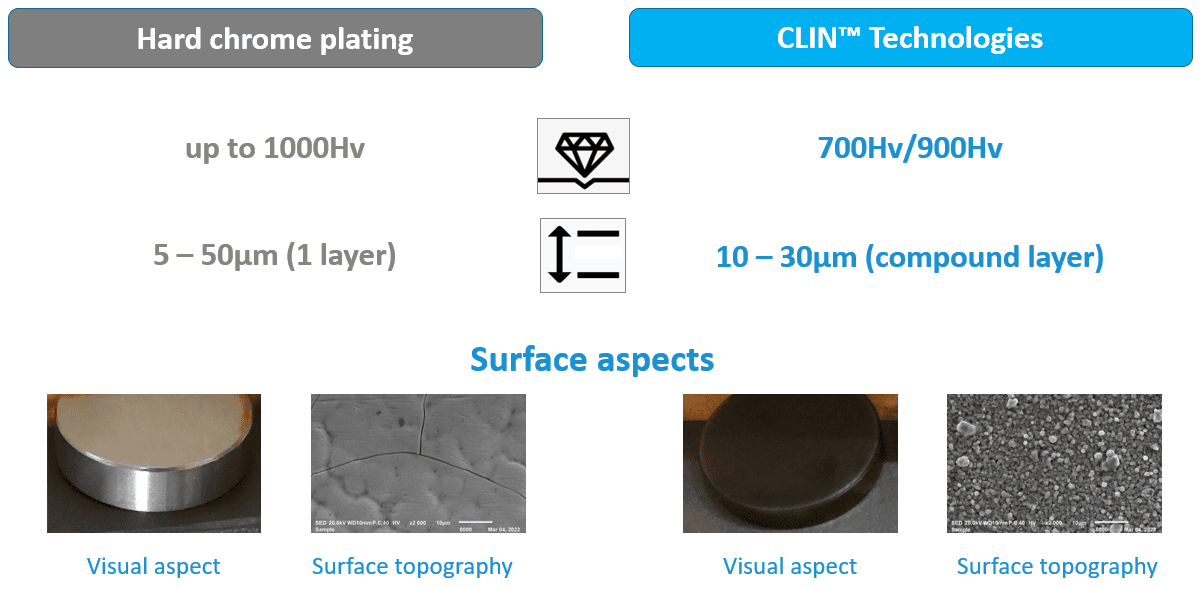
- No flaking risk (because the layer is an integral part of the base material),
- No micro-cracks,
- High impact strength thanks to the ductility of the layer,
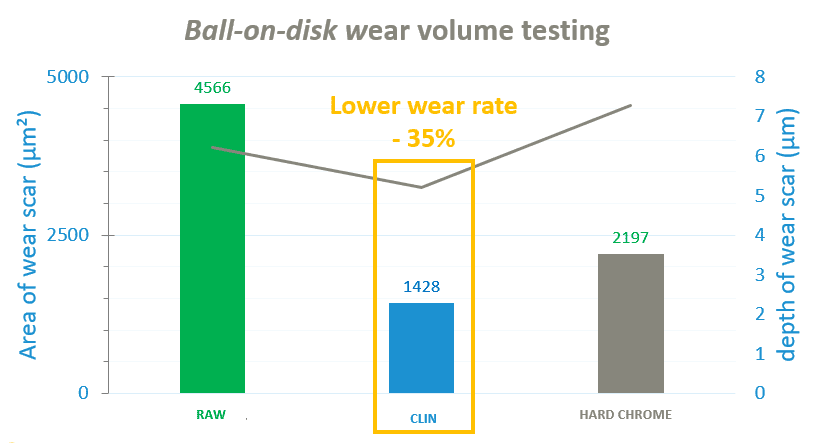
- Mechanical surface resistance thanks to nitrogen diffusion,
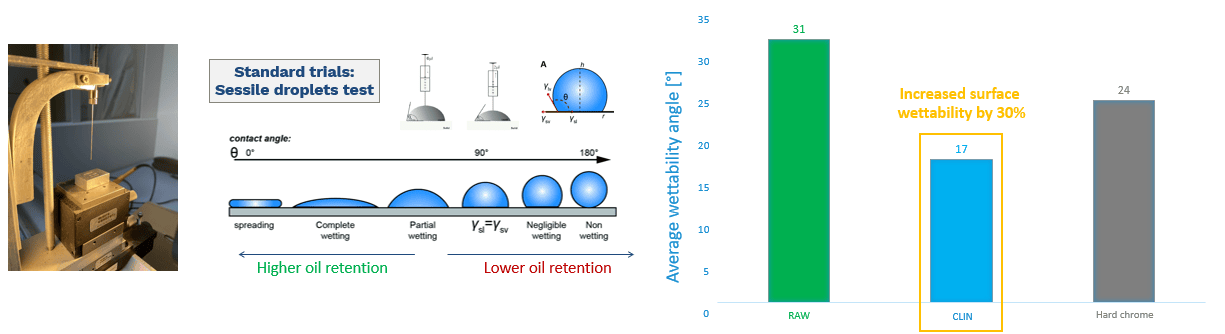
- Better lubrication retention thanks to the porous outer surface,
- Similar seals and guide elements to hard chrome plating.
Nitrocarburizing in molten salts is therefore a process:
- in terms of ecology – a more environmentally friendly and socially ethical treatment,
- in terms of process – a treatment that does not require grinding or other forms of post-processing,
- in terms of quality – a treatment that allows for obtaining comparable or improved surface quality
The main advantages of nitrocarburizing over technical chrome plating stem from the distinct nature of the surface modification processes:
- Chrome plating creates a coating – a foreign body to the base – unbound to the substrate.
- In nitrocarburizing, nitrogen diffuses into the material and bonds strongly with the workpiece, creating an intermediate diffusion layer.
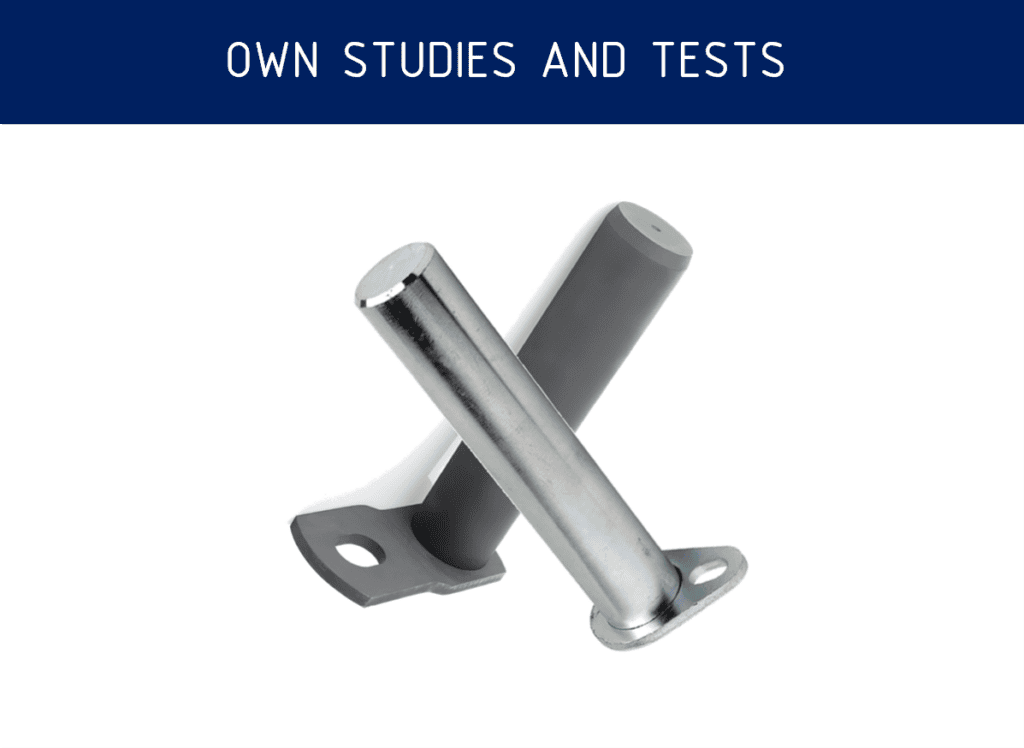
Examples of our own researches illustrating the differences in the functional properties of the surfaces of the same materials subjected to technical chromium plating and nitrocarburizing in salts: